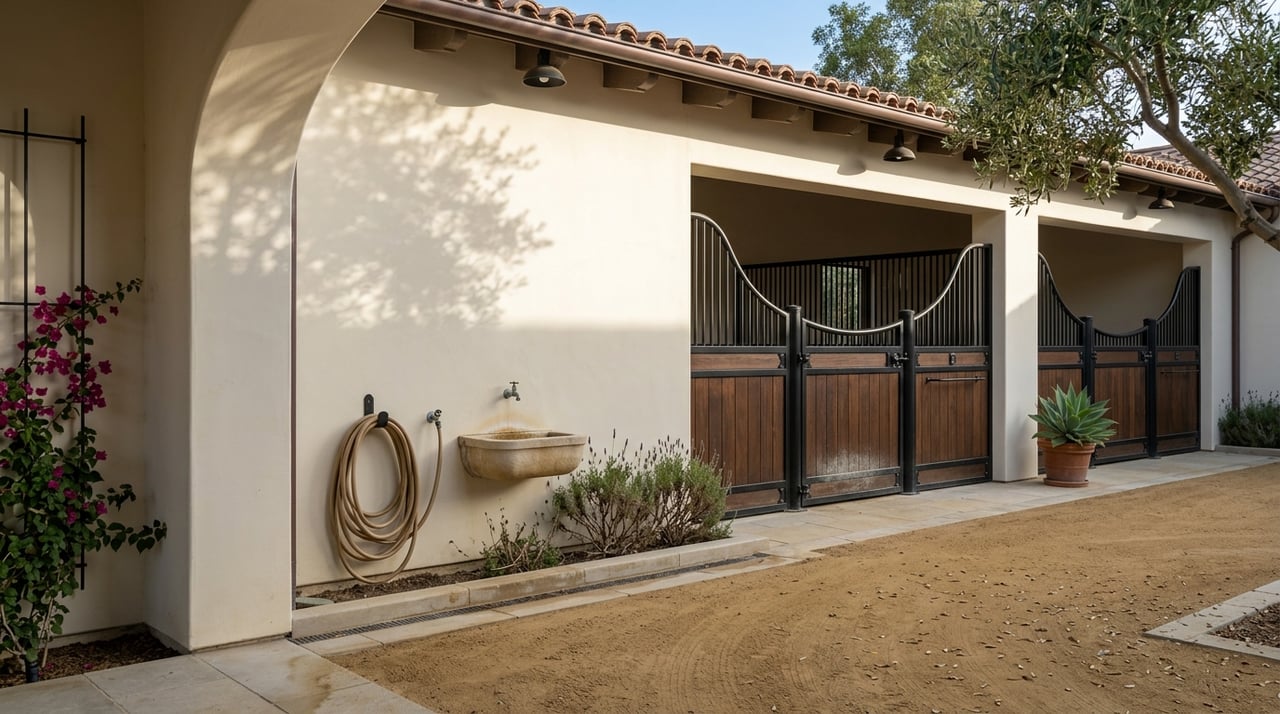
If you picture Rancho Santa Fe as more than a place to live, you are already thinking about it the right way. For many buyers, its equestrian identity is not just about owning land or a barn. It is about daily access to trails, long-standing horse traditions, and a property setup that actually works in real life. If you are exploring this lifestyle, understanding how it all fits together can help you make a smarter move. Let’s dive in.
What Makes Rancho Santa Fe Equestrian
Rancho Santa Fe’s horse culture is shaped as much by planning and land use as it is by lifestyle. In the Covenant, the Rancho Santa Fe Association describes the Protective Covenant as the community’s principal governing document, and it plays a major role in preserving the area’s rural character.
One of the clearest signs of that identity is the trail network. The Association says Covenant residents and their guests have access to nearly 60 miles of private equestrian and pedestrian trails, along with open space and trails throughout the community. That private system helps create a setting where riding is built into the rhythm of daily life rather than treated as a distant weekend activity.
The trail rules support that feeling. According to the Association’s trail rules guide, the trails are private, horseback riding and pedestrians are allowed, and motorized vehicles, bicycles, smoking, and alcohol are not. The same framework helps separate equestrian and pedestrian use from regular vehicular traffic, which is a meaningful part of what gives the Covenant its distinctive appeal.
Why Trails Matter to Buyers
For a horse owner, trail access can shape your day-to-day experience just as much as the home itself. A beautiful property may look compelling on paper, but easy access to private riding routes often has a bigger impact on how often you ride and how convenient ownership feels.
That is especially true in Rancho Santa Fe, where the equestrian lifestyle is tied to the community’s broader land-use plan. The Association’s code states that trail easements may be required in certain situations when a trail is already planned, already in use, or otherwise needed under the regulatory code framework. In other words, trails here are not just amenities. They are part of how the community is organized.
If you are evaluating a property, it is worth thinking beyond square footage and finishes. Trail connection, access points, and how easily you can move between your home setup and the riding network may matter just as much as the architecture.
Horse Ownership Rules to Know
One of the most important things to understand is that not every property can automatically accommodate horses. In the Covenant, horse keeping is governed by the Association’s Animal Keeping Regulation, which requires an animal-keeping permit from the Art Jury before horses may be kept on a lot.
The same regulation sets a minimum lot size of 2 gross acres for horses. It also allows up to one animal per gross acre on residential property, subject to Art Jury discretion. That means buyers should confirm not only lot size, but also whether a parcel’s layout and approvals align with their intended use.
The code also makes an important distinction about purpose. On residential property, horses may be kept only for the owner’s personal pleasure and benefit. Commercial horse operations such as boarding, breeding, riding clubs, and horse shows are prohibited on residential lots.
This matters because it shapes what kind of equestrian ownership is truly feasible. If you want horses at home, the property must support legal personal use. If your needs involve training, boarding support, or a more service-based setup, you may be better served by pairing your home search with a nearby equestrian facility.
What to Look for in a Horse Property
In Rancho Santa Fe, a useful horse property is not simply a large one. It needs to be functional, legally viable, and efficient for everyday use.
The local regulations address practical elements such as manure removal, storage of organic material, and setbacks for barns, stables, corrals, paddocks, riding rings, and related structures. Those details may not be glamorous, but they can strongly affect how easy a property is to use and maintain.
Beyond local code, general horse-housing guidance from Extension horse care resources highlights several basics that align well with what buyers should evaluate here. Site drainage, ventilation, natural light, access for trailers, nearby turnout, water, shelter, and durable fencing all matter when you are assessing whether a property will function well over time.
As you compare options, pay close attention to:
- Minimum lot size and permit requirements
- Barn and paddock placement
- Arena or riding ring space
- Drainage and year-round usability
- Turnout access and fencing quality
- Trailer access and circulation
- Manure handling and service logistics
- Connection to the local trail system
For many buyers, these details are more important than cosmetic upgrades alone. A polished residence is valuable, but the equestrian lifestyle depends on how the land performs every day.
Local Equestrian Facilities
Even if you plan to keep horses at home, nearby facilities are part of Rancho Santa Fe’s broader riding ecosystem. They can offer boarding, training, schooling environments, or show access that complements residential ownership.
Osuna Ranch
The Association describes Osuna Ranch as the Covenant’s signature on-site equestrian facility and a historic ranch purchased in 2006 for preservation. The Association notes that the ranch includes about 34 stalls, 16 paddocks, and two arenas, with boarding and training through Hap Hansen Stables. It also states that Covenant residents receive priority for stalls and paddocks.
Osuna Ranch also carries historic significance. The Juan Maria Osuna Adobe was placed on the National Register of Historic Places in 2017, which adds another layer to the sense of continuity that defines Rancho Santa Fe.
Rancho Riding Club
Rancho Riding Club is another established part of the local equestrian scene. The club says it has served the Rancho Santa Fe community since 1946 and sits on an 11-acre property with 60 inside box stalls, 50 outside corrals, hot-water wash racks, and a free-flow exerciser.
For buyers who value an active riding environment, that kind of established infrastructure can be a meaningful advantage. It offers another path to participate in the equestrian lifestyle without needing every feature on your own property.
Nearby Training and Show Access
The surrounding area also adds depth to Rancho Santa Fe’s appeal. Rancho Cielo Equestrian Facility says it is located on the east side of Rancho Santa Fe, minutes from the Village and about 10 minutes from Del Mar Horse Park and the fairgrounds, with multiple arenas, barns, sheltered corrals, turnouts, and trail access.
The research also identifies South Coast Equestrian’s Edal Ranch in Rancho Santa Fe as a local option with a jumping arena, stalls, turnouts, and direct access to the RSF trail network. In addition, Del Mar Horsepark is described as a 65-acre facility with stabling for 500 horses and year-round show use, making the broader area appealing if you want both daily riding and access to competitive infrastructure.
Choosing Home Boarding or Facility Boarding
For many buyers, the real decision is not whether they love the equestrian lifestyle. It is how they want to live it.
Some prefer the privacy and convenience of keeping horses at home, provided the property meets Covenant requirements and supports daily care. Others want the beauty and space of Rancho Santa Fe living while relying on a dedicated facility for boarding, training, or show preparation.
Here is a simple comparison:
| Option | Potential Benefits | Important Considerations |
|---|---|---|
| Keep horses at home | Daily convenience, private setting, direct connection to your land | Requires permit, minimum 2 gross acres, personal-use limitations, property infrastructure matters |
| Board at a facility | Access to training, staff support, specialized amenities | Ongoing boarding logistics, less direct at-home access |
| Hybrid approach | Enjoy residential lifestyle with flexible riding support | Requires coordination between home, facility, and trail access |
The best fit depends on your priorities. If your focus is ease, support, and flexibility, a nearby facility may make more sense. If your priority is a fully integrated ranch lifestyle, the property itself needs to be evaluated with care.
What This Means for Your Search
Rancho Santa Fe offers a rare combination of private trails, long-standing equestrian tradition, and properties that can support a true horse-oriented lifestyle. At the same time, the Covenant’s rules are specific, which means buyers benefit from looking closely at both the romance and the reality of ownership.
When you approach the market with a clear understanding of permits, acreage, trail access, and nearby facilities, you can narrow your search in a more strategic way. That often leads to better decisions and a property that feels right not just on closing day, but in the routines that follow.
If you are considering an equestrian property or looking for guidance on Rancho Santa Fe Covenant homes, Kerry Appleby-Payne offers a thoughtful, relationship-driven approach rooted in local market knowledge and white-glove service.
FAQs
Can every Rancho Santa Fe Covenant property keep horses?
- No. The Association’s Animal Keeping Regulation requires an animal-keeping permit from the Art Jury and a minimum of 2 gross acres before horses may be kept on a residential lot.
Are Rancho Santa Fe equestrian trails open to the public?
- No. The Association states that the trail system is private and reserved for Covenant residents and their guests.
Can you operate a boarding business from a Rancho Santa Fe residential property?
- No. The Animal Keeping Regulation says commercial horse operations, including boarding, breeding, riding clubs, and horse shows, are prohibited on residential property.
What equestrian facilities support the Rancho Santa Fe horse lifestyle?
- Local and nearby facilities mentioned in the research include Osuna Ranch, Rancho Riding Club, Rancho Cielo Equestrian Facility, South Coast Equestrian’s Edal Ranch, and Del Mar Horsepark.
What should buyers evaluate in a Rancho Santa Fe horse property?
- Buyers should look closely at legal eligibility, lot size, permit requirements, trail access, barn and paddock placement, drainage, turnout, fencing, trailer access, and manure-handling logistics.