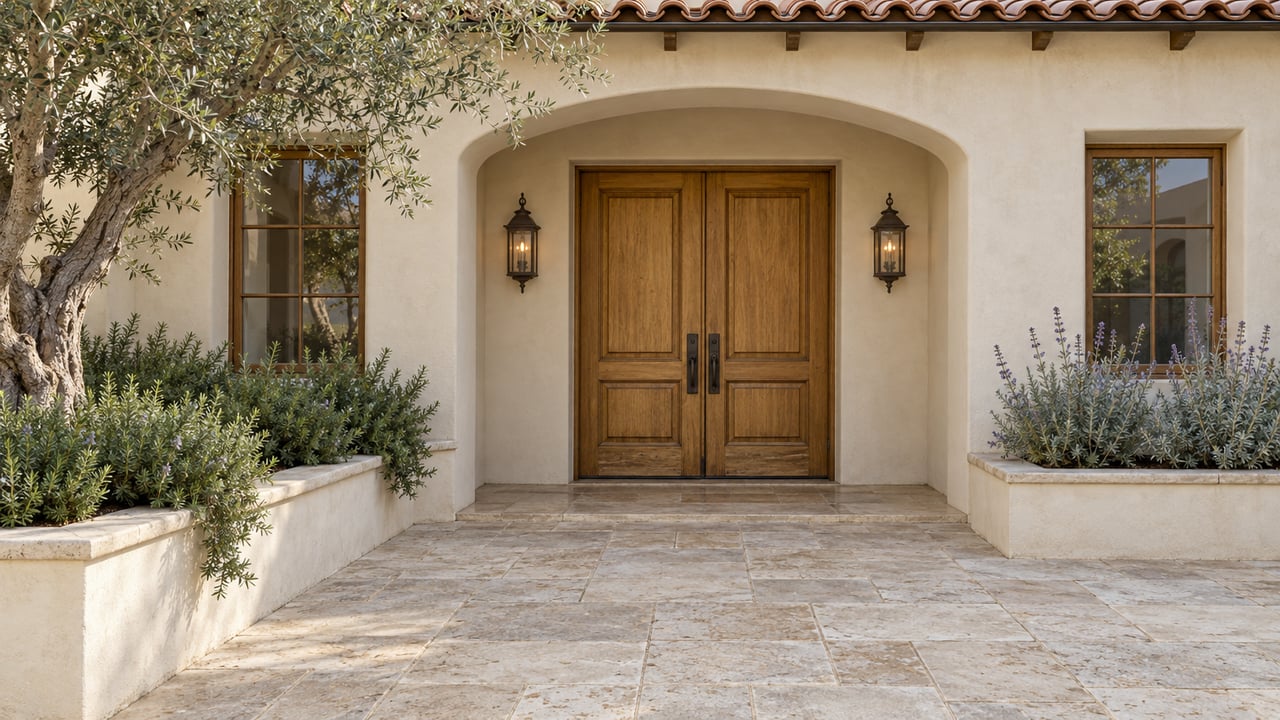
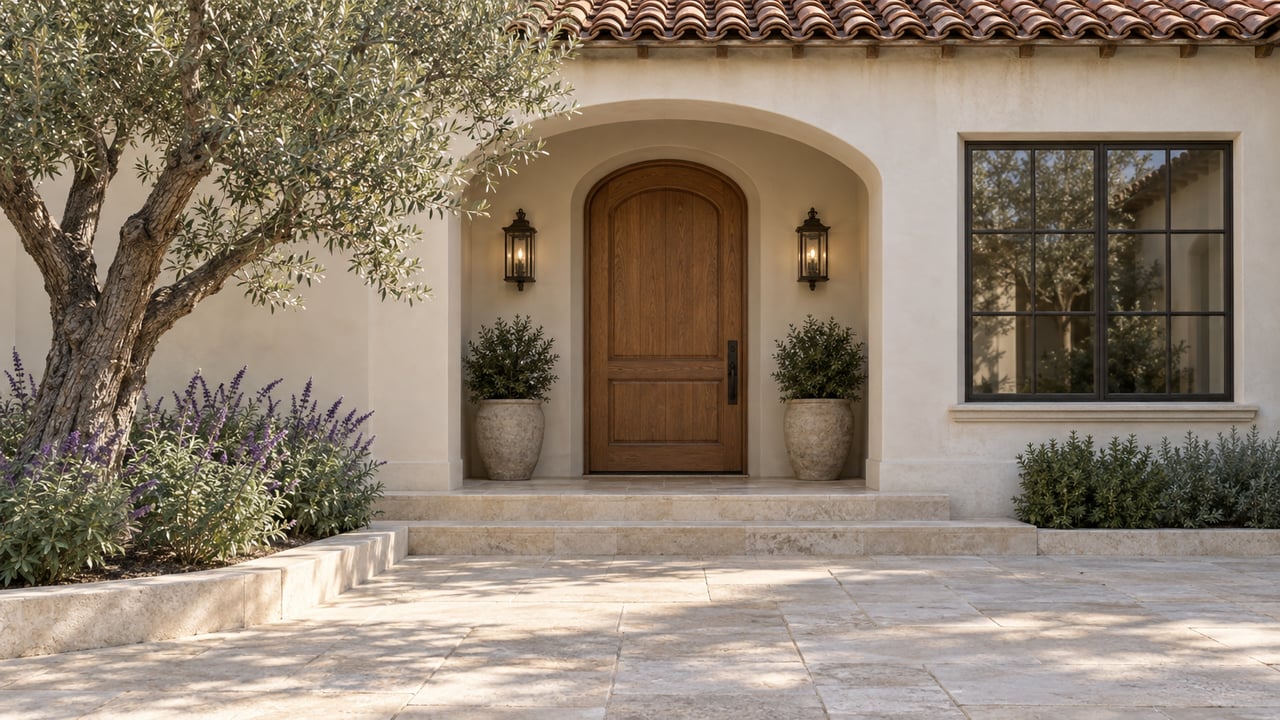
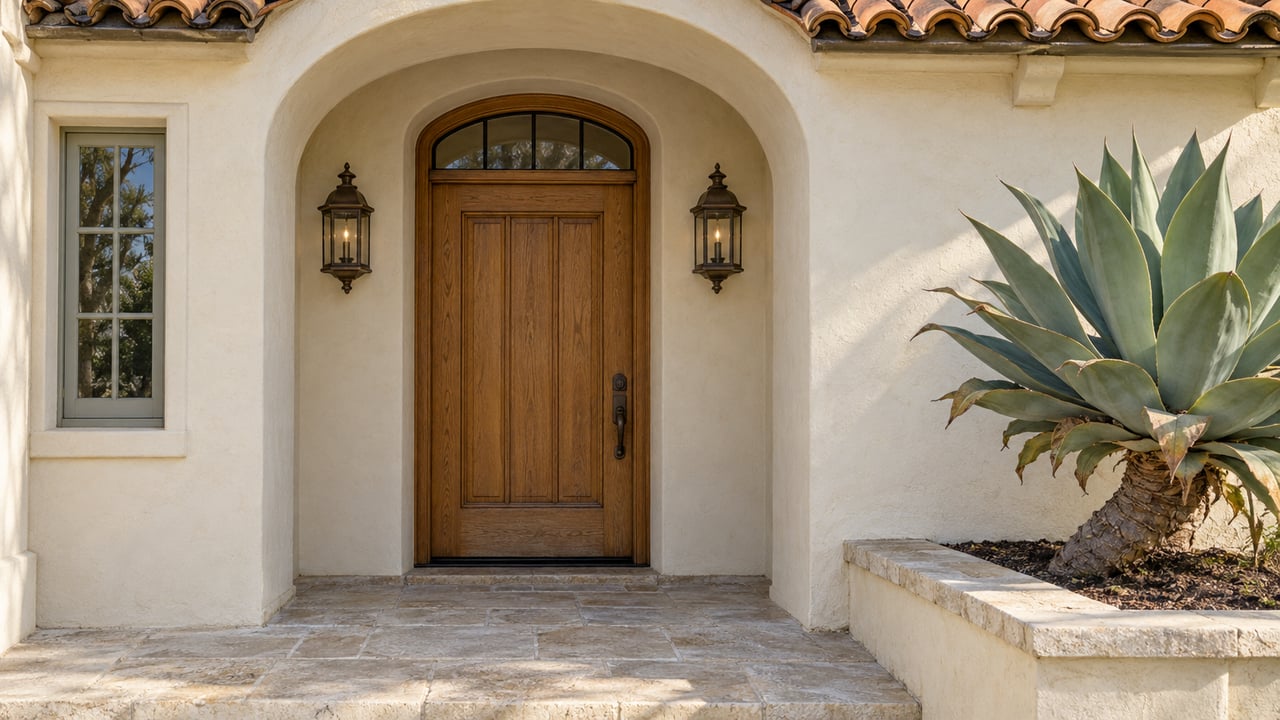
Picture two houses, both roughly 2,800 square feet, both a short walk from the same beach, sitting a mile and a half from each other. One is on Stratford Court, perched above the bluffs. The other sits in Del Mar Heights, on a quiet residential street with a canyon view instead of an ocean one. On paper they read the same: similar age, similar bones, similar finish level. In practice, the price gap between them can run past $2 million. The difference has little to do with the ocean view itself. It has to do with what each owner is legally allowed to do next.
That distinction, not square footage, not even proximity to the water, is the number serious Del Mar buyers should be pricing before they price anything else.
The Median That Isn't Telling You Much
Del Mar is a small city, and its housing market moves in a small number of transactions. Citywide sales run somewhere in the range of 140 to 160 closings a year across every property type, which means a single unusual sale can swing the reported median from one month to the next. In January 2026, one closely tracked read of CRMLS data for detached 92014 homes counted just 25 active listings, down 40.5 percent year over year, with only five closings that month and a median sale price near $2.33 million. A separate January 2026 read of the same zip code put the median sale price at $3.3 million, up 18.4 percent from the prior year. By September 2026, citywide list-price data showed a median above $4.2 million, with average days on market climbing into the sixties.
None of these figures are wrong. They are measuring different slices of the same small pond, sometimes the incorporated city, sometimes the 92014 zip code, sometimes detached homes only. But the spread between them tells you something more useful than any single number could: in a market this thin, the median is noise. The signal is underneath it.
What Buyers Are Actually Paying For
Underneath the median, the properties commanding the biggest premiums share a specific trait: room to grow. That potential carries real value beyond a property's current footprint. A lot frozen in place by an overlay zone, even one with a better view, can trade at a discount relative to a comparable property with fewer restrictions. Buyers are not just purchasing a house. They are purchasing whatever the deed still lets them do to it.
Del Mar makes that distinction unusually stark: SD Remodel Experts notes that almost none of the city sits outside the California Coastal Zone, and the city's own zoning code layers additional limits on top of state coastal rules.
The Rules That Decide How Much Room a Lot Has
A handful of overlapping restrictions determine whether a given Del Mar property still has development headroom:
- Height caps in sensitive zones. According to Zoneomics, under the city's R1-14 and R1-10 residential zoning, any property inside the Bluff, Slope, and Canyon Overlay Zone is capped at 14 feet in height.
- Bluff setbacks. New development in the coastal bluff overlay must generally sit back from the bluff edge.
- A citywide coastal permit trigger. Because nearly all of Del Mar sits in the Coastal Zone, most exterior additions and many remodels require a Coastal Development Permit, adding a layer of discretionary review that inland San Diego County properties rarely face.
- ADU limits that shrink near the coast. According to Better Place Design Build, a detached accessory dwelling unit can generally reach 16 feet, but that drops to 14 feet inside the Bluff, Slope, and Canyon Overlay.
Two homes on paper-identical lots can land on opposite sides of every one of these lines. One might sit comfortably inside a standard zone with room to add a second story. The other might be locked at 14 feet, boxed in by a bluff setback, and facing a Coastal Development Permit. That is the gap a spec sheet never shows you.
The Lawsuit Still Deciding How Much More You Can Build
Layered on top of the zoning code is a legal fight that has not finished playing out. In 2023, Del Mar joined Redondo Beach, Carson, Torrance, and Whittier in suing the state over SB 9, the law requiring cities to ministerially approve duplexes and lot splits on single-family lots. The five charter cities argued the state was overriding their constitutional authority over local land use. In April 2024, a Los Angeles County Superior Court judge sided with the cities, ruling that the state had not shown SB 9 would actually increase below-market-rate housing and, for a time, ordering the state to stop enforcing the law against the plaintiff cities.
Del Mar had already been required by the state's Housing and Community Development Department to adopt its own SB 9 ordinance regardless of the lawsuit, and did so with an added twist: any two-unit development on a single-family lot must deed-restrict at least one unit as lower-income rental housing for 55 years. As The Coast News reported, the city also found itself in a separate dispute with the California Coastal Commission over SB 9's 60-day automatic-approval clock, which the Coastal Commission has said does not apply inside Del Mar's Coastal Act jurisdiction.
As SnapADU reported, in November 2025, a Court of Appeal reversed the trial court's judgment and sent the case back for reconsideration under the state's amended law, without ruling on SB 9's constitutionality outright. As of today, SB 9 remains in effect in Del Mar, and any unit built under it must stay detached and under 16 feet in height. But the legal ground under that rule has shifted twice in two years and is not guaranteed to hold its current shape. For a buyer weighing a property's future lot-split or duplex potential, that is not a settled fact. It is a live variable.
The Clause Tied to Two Specific Sites
One more wrinkle applies narrowly, but matters enormously if you are looking at the right parcel. Del Mar's adopted Housing Element includes a contingency program specifically naming the North Bluff and South Stratford areas: if the city cannot finalize a binding agreement with the state to build at least 54 lower-income units on state-owned property, it is required to rezone North Bluff and/or South Stratford sites under a Housing Element Implementation Overlay Zone, allowing multifamily development at 20 to 25 dwelling units per acre by right. That is a meaningfully different zoning future than the single-family character those areas carry today, and it is written into the city's own adopted planning documents rather than buried in a state statute.
Pricing the Part You Can't See in Photos
None of this means a Del Mar home without expansion room is a bad buy. Plenty of buyers want a finished, move-in-ready property and have no interest in adding square footage. But if you are comparing two listings that look similar on paper, the questions worth asking your agent go past bedroom count:
Is this parcel inside the Bluff, Slope, and Canyon Overlay Zone? Does an addition or ADU on this lot trigger a Coastal Development Permit, and has the seller already had any conversations with the city about it? Is the property within the North Bluff or South Stratford areas named in the city's Housing Element contingency program? If an SB 9 lot split is part of your plan, what does the city's current ordinance actually allow today, given that the underlying law has changed twice recently?
Those answers, not the headline median, explain why two houses that look the same on a listing sheet can sell two million dollars apart.
A Few Questions Worth Asking Before You Write an Offer
Does the 14-foot height limit apply to my whole property, or just part of it? It depends on where the Bluff, Slope, and Canyon Overlay boundary falls on your specific lot. A geotechnical or planning consultation before you write an offer is the only way to know for certain.
Is the SB 9 fight actually over? Not as of this writing. The Court of Appeal sent the case back for further proceedings in November 2025. Treat any SB 9-based development plan as subject to change.
Where can I find the city's actual zoning rules for a specific parcel? Del Mar's municipal code and Housing Element are public documents, and the city planning department can confirm overlay zone status, height limits, and Coastal Development Permit requirements for any address before you commit to a purchase price built on assumptions about what you can add later.
Del Mar rewards buyers who look past the listing photos and the median headline to the zoning map underneath. That is where the real price difference lives, and where a trusted advisor earns their fee. If you are comparing properties in Del Mar and want a clear read on what a specific lot's development potential is actually worth, the team at Appleby Family Group can walk you through it property by property.
This article is general information, not legal, tax or financial advice. Consult a qualified professional about your situation.