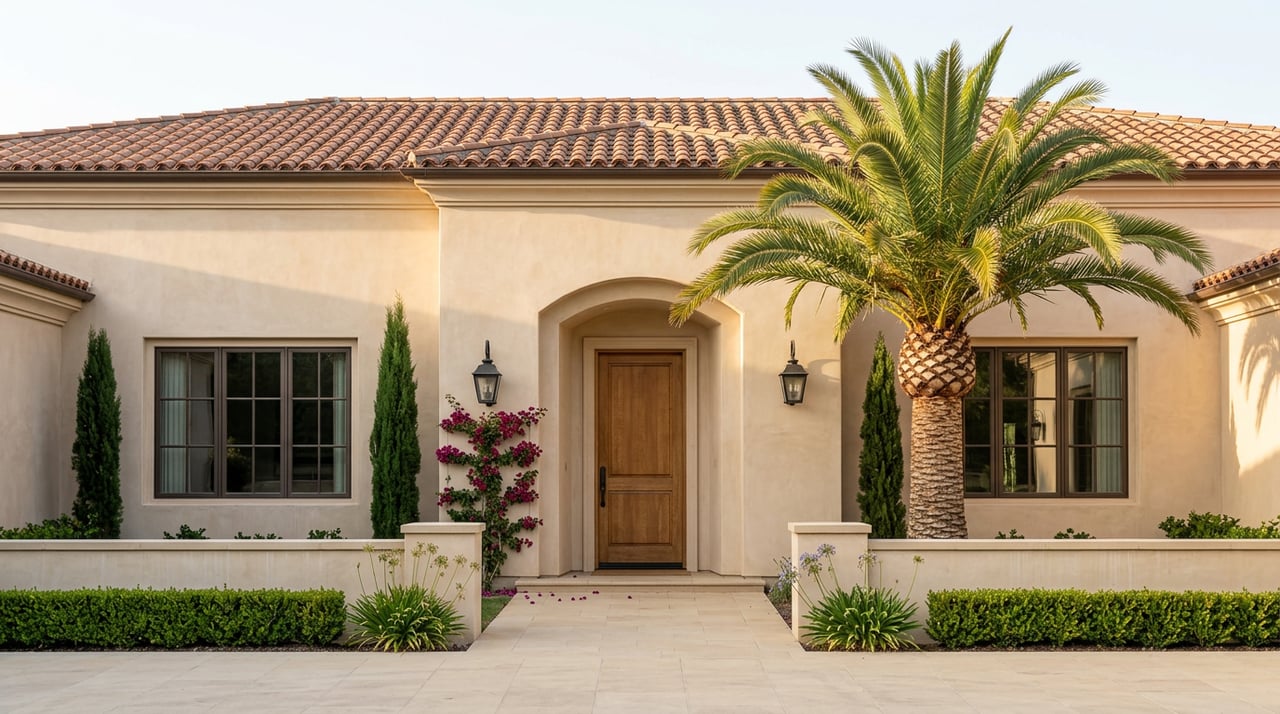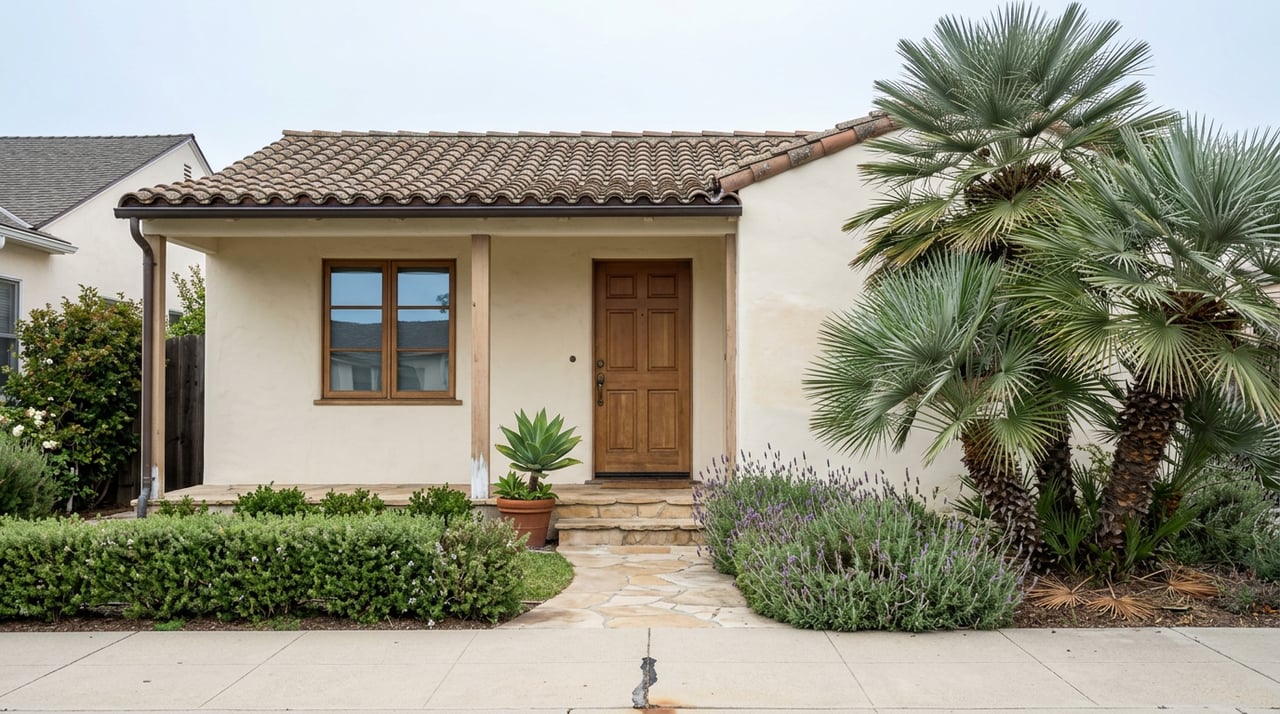
On April 15, 2026, the La Jolla Development Permit Review Committee sat down to look at a modest remodel plan for a Bird Rock house. The owner wanted to take a 1,957-square-foot home up to 4,388 square feet, more than double its footprint. The committee didn't approve or deny it that day. It asked for more paperwork: fence materials, updated size confirmations, a fresh floor area ratio calculation, and proof the design cleared the required bluff setback. That single meeting is a better guide to what a La Jolla address actually costs than any median price you'll find on a portal.
Because the truth about this market isn't that it's expensive. Everyone already knows that. The truth is that the same dollar buys a wildly different amount of usable house depending on which side of an invisible line your lot happens to sit on, and that line has almost nothing to do with square footage, finish quality, or the year a home was built. It has to do with where the bluff edge is measured from.
The Foot You're Paying For, Whether You Build or Not
San Diego's coastal bluff setback rule has a simple starting point: 40 feet from the bluff edge, per Municipal Code Section 143.0143(f). Nobody stops at 40 feet, though. Add a geotechnical projection for 75 years of erosion, then add a safety factor against landsliding, and the real number for most Pacific Beach, La Jolla, and Bird Rock lots had been landing around 53 to 55 feet. As of July 1, 2026, that number changed. New guidance folding in the Coastal Commission's November 2024 sea level rise policy pushes the total to roughly 63 to 64 feet, a 9 to 10 foot jump that didn't exist a year ago.
Ten feet doesn't sound like much until you translate it into buildable area. On a premium coastal lot, that shift typically eats 10 to 15 percent of the pad you thought you had, which on a high-value parcel can represent $50,000 to $150,000 in lost project value before a single wall goes up. Then there's the entry fee just to find out where you stand: a comprehensive coastal geotechnical analysis, the kind that includes soil borings, historical aerial photo review, and slope stability modeling, runs $8,000 to $15,000 for a standard lot and can climb past $25,000 for anything with prior landslide activity or unusual geology. That report isn't optional and it isn't a one-time cost. The monitoring plan that comes with it requires inspections every five years for the structure's full 75-year design life, at $2,500 to $5,000 a visit, which adds up to somewhere between $37,500 and $75,000 over the life of the house.
None of this shows up in a listing sheet. It shows up in escrow, in the architect's second draft, and in the contractor's revised bid.
Two Reports, Two Directions, One Market
Here's where the median price starts to look less like a single number and more like an average of two different conversations. Redfin's figures for the three months ending May 2026 put La Jolla's median sale price at $2.3 million, down 2.1 percent year over year, with price per square foot at $1,060, down 6.6 percent, and homes taking an average of 38 days to sell compared to 25 the year before. Zillow's home value index, updated May 31, 2026, tells a different story for the same window: an average home value of $2,476,319, up 4.4 percent year over year.
Two credible measures of the same market, pointing in opposite directions over roughly the same months. That's not a data error. It's what happens when a single zip code blends bluff lots carrying six-figure regulatory drag with inland lots that carry none of it. Which type of home closes in a given month shifts the median more than any actual change in what land is worth.
What the Hill Buys Instead
Drive ten minutes inland from the water and the regulatory picture changes completely. Muirlands sits on rolling terrain shaded by mature eucalyptus and pine, offering larger lots and more privacy per dollar, and none of it touches a coastal bluff overlay. A remodel there answers to standard citywide floor area ratio limits, typically 0.4 to 0.6 depending on zoning, with no bluff edge determination, no 75-year erosion projection, and no mandatory five-year inspection cycle. The Coastal Development Permit process that adds two to six months and $15,000 to $25,000 in carrying costs to a bluffside project simply doesn't apply.
La Jolla Shores complicates the picture further. In 2021 the Coastal Commission approved a code update that placed a 0.6 floor area ratio cap on the Shores specifically, where none had existed before. Two lots of identical size, one in the Shores and one in Muirlands, can now support meaningfully different maximum structure sizes for reasons that have nothing to do with the market and everything to do with a planning decision made years before either owner bought in.
The Ruling That Sounds Like Relief, and Isn't Quite
On April 23, 2026, the California Supreme Court issued a unanimous decision in Shear Development Co. v. California Coastal Commission that limits the Commission's ability to override a local government's already-approved building permit. It's a real shift in procedural authority, and for buyers eyeing a fixer with expansion plans, it reads like good news.
Read the fine print and the relief shrinks. The ruling changes who gets the final word on an appeal. It does not change the setback math, the erosion projections, or the requirement to obtain a Coastal Development Permit in the first place. A project still needs the same geotechnical report, the same 75-year monitoring commitment, and the same review by the La Jolla Development Permit Review Committee, which meets on the second and third Tuesday of each month and wants complete plan sets 24 hours ahead of time. The Bird Rock remodel under review this spring illustrates exactly how granular that scrutiny gets, down to the fence material.
The Village Still Prices Scarcity, Not Just Location
None of this friction touches the commercial core the same way. Prospect Square, the three-story mixed-use building at 1025 Prospect Street with roughly 33,055 square feet of restaurant, gallery, office, and subterranean parking space, sold in March 2026 for $10.3 million. The building has housed tenants like Cody's Restaurant, Beeside Balcony, and Arjang Fine Art, and its 1984 construction has been updated twice, in 2022 and again in 2024. Brokers involved in the deal pointed to something simple: trophy coastal retail in the Village almost never trades, so when it does, it draws real competition regardless of what's happening with bluff setbacks two blocks away.
The Village itself, defined by the boundary of Prospect Street, Girard Avenue, and Torrey Pines Road under the city's own community plan, is also mid-improvement. The La Jolla Community Foundation's Girard Avenue streetscape project, designed by architect Mark Steele and estimated at $7.43 million total as a public-private partnership with the city, recently secured an additional $850,000 in federal funding for its second phase, championed by Rep. Scott Peters. It's cosmetic work: wider plazas, better lighting, improved crossings. It has nothing to do with bluff physics. But it's a reminder that value in the Village core is being built through amenity and scarcity, while value on the bluff edge is increasingly a conversation about what you're allowed to build at all.
What This Means Before You Write an Offer
If you're weighing a home for its expansion potential, the bluff line matters more than the view does. A property priced for its ocean proximity may be quietly carrying tens of thousands of dollars in geotechnical and monitoring obligations that never appear in the listing description, and the setback that governs it just got stricter. A comparable budget spent in Muirlands or another inland pocket often buys more actual buildable house, without a Coastal Development Permit clock running in the background.
Neither choice is wrong. A remote buyer prioritizing turnkey ease and full-time ocean exposure may find the added cost entirely worth it. A design-focused buyer planning a significant remodel needs to know the setback and FAR numbers before falling for a floor plan that can't legally exist on that lot.
A Few Questions Worth Asking Before You Tour
Does the Supreme Court ruling mean the Coastal Commission can't stop my project? No. It limits the Commission's ability to override a permit your city has already approved. The setback distances, the geotechnical requirements, and the permit process itself are unchanged.
Does every home in La Jolla need a Coastal Development Permit? No. Properties between the first public road and the sea, within 300 feet of a beach or bluff top, or near protected wetlands typically fall into permit-required territory. Inland lots in places like Muirlands generally don't.
Is a bluff lot still worth the extra cost? That depends entirely on what you're buying it for. A move-in ready home with no expansion plans carries far less exposure than a fixer you intend to significantly enlarge, where the setback math can quietly cut your buildable footprint before design even begins.
If you're comparing a bluff-view listing against an inland alternative and need someone to run the actual numbers on setback exposure, permit timelines, and what a lot will really support, that's the conversation to have before you write an offer, not after. Appleby Family Group has spent three generations in these La Jolla pockets and can walk the specifics of any address with you.